AI Receptionist for Locksmiths: Lockout Calls at 2am
A stranded caller at 2am calls the next locksmith if you don't pick up. Here's how an AI receptionist answers every lockout call, flags the urgent ones and texts you the details.
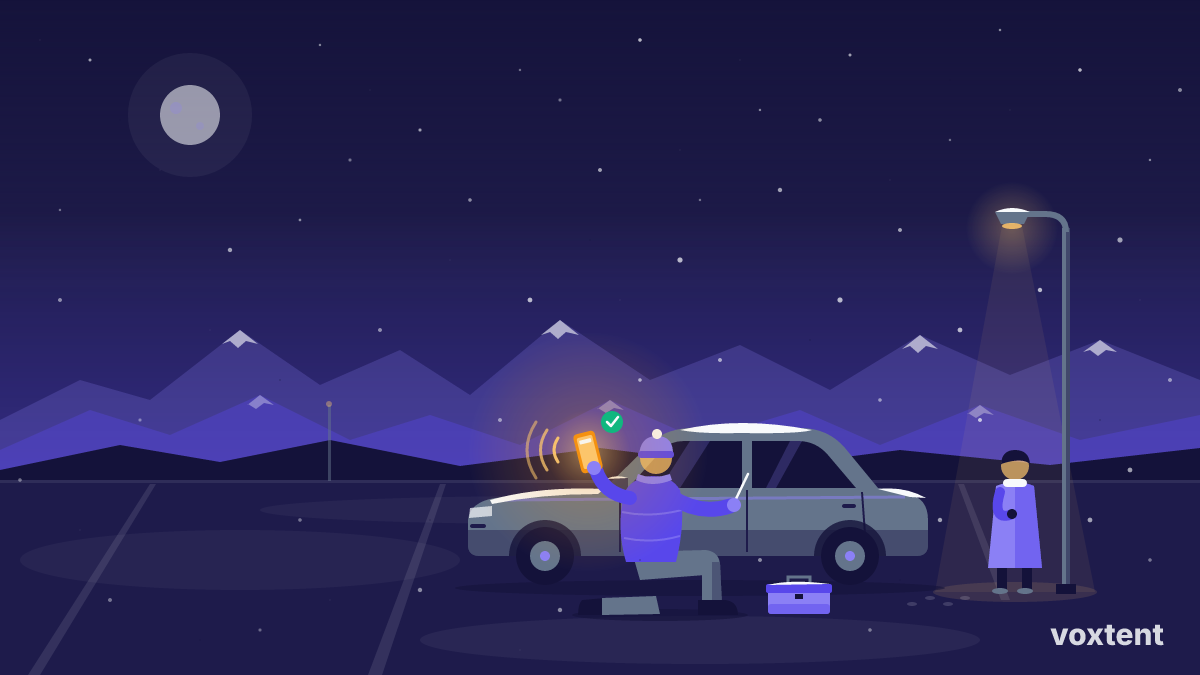
An AI receptionist for locksmiths answers every call in about 3 seconds, day or night, so a 2am lockout caller hears a real answer instead of your voicemail. It takes the address, the lock or vehicle details and a callback number, flags the emergency and texts you a summary so you can decide fast whether to roll the van.
Picture a January night in Denver. Someone is standing in a parking lot off Colfax, the car is locked, and it's 10 degrees out. Or a skier is stuck at an I-70 trailhead with the keys on the seat. They are not leaving a message. They're calling the next locksmith on the list.
Bottom line: Lockout callers want an answer right now, not a beep. An AI receptionist picks up every time, gets the job details and texts them to you, so you stop losing night calls to whoever answers first.
Why lockout calls are different
Most trades get calls that can wait a day. A dripping faucet. A fence quote. Locksmith work is not like that.
A lockout caller is stressed, often cold, and usually on a phone with low battery. They search "locksmith near me," tap the first number and wait a few rings. If nobody answers, they hang up and tap the next one.
That means your phone is your front door. If you're under a car door at another job, asleep, or driving, that call is gone. You never even know it was a paying job.
An AI receptionist doesn't sleep and doesn't get stuck on another call. It answers nights, weekends and holidays, including the ones where you finally took the evening off.
What happens on a 2am lockout call
Here's how a typical after-hours lockout call goes with an AI receptionist for locksmiths like Voxtent:
- The phone rings. Your existing business number forwards to Voxtent.
- It answers in about 3 seconds. The caller hears a calm, clear greeting with your business name.
- It asks the questions you need. Where are you? Car, home or business? What kind of vehicle or lock? Best callback number?
- It flags the emergency. A lockout at night gets marked urgent, not buried with routine requests.
- It texts you a summary. You read the address and details on your phone and call the customer back to confirm.
You still make the call on price, timing and whether you go. The difference is the customer didn't hang up and dial someone else while your phone was face down on the nightstand.
What to have it ask every lockout caller
A good summary saves you a callback full of basic questions. These are the details worth capturing on every lockout call:
- Exact location. Street address or cross streets. For parking lots, the store name or lot section.
- Type of lockout. Vehicle, house, apartment or business.
- Vehicle details. Year, make and model. This tells you what tools and blanks you'll need.
- Keys inside or lost. A locked-in key is a different job than a lost key that needs cutting or programming.
- Anyone or anything at risk. A child or pet locked in a car, or an engine left running.
- Callback number. Especially if the caller is borrowing someone else's phone.
- Name, and whether they can show ID at the door or car. Most locksmiths want proof the caller owns what they're getting into.
With those in your text, you can call back and say, "I've got the details. I'm about 25 minutes out." That sounds like a pro. It also builds trust with someone who may be nervous about who's going to show up.
Prices and arrival times: don't overpromise
Stranded callers ask two things right away: how much, and how soon. Those are the two answers that cause the most trouble if they're wrong.
Your night rate depends on the job, the distance and the time. Arrival depends on where you are and the roads. A trip from Lakewood to a lockout near Denver International Airport in a snowstorm is not the same as a 10-minute run across Aurora.
The safest setup is to let the receptionist capture the details and tell the caller you'll call right back to confirm price and timing. You quote, you commit. Nobody gets promised a number you can't hit.
The daytime work it books, too
Lockouts are the loud part of the business. The steady money is often daytime work you can schedule:
- Rekeys after a home purchase
- Lock changes between renters in Denver, Aurora and Lakewood
- Deadbolt and smart lock installs
- Business lock and master key work
- Car key cutting and programming
Those callers aren't in a hurry, but they'll still call someone else if you don't pick up. Voxtent can book these as appointments, so a landlord who calls during your lunch break gets a time slot instead of voicemail.
Some Front Range locksmiths may also see extra rekey and lockout calls around student move-in and move-out near CSU in Fort Collins, CU Boulder and the Colorado Springs campuses. Watch your own call log in August and May to see if that holds for you.
Spanish-speaking callers
Plenty of callers along the Front Range are more comfortable in Spanish. A stressed person locked out at night is even less likely to push through a language barrier. They'll just call someone else.
Voxtent speaks English and Spanish. The caller talks in the language they're comfortable with, and you still get the summary text so you know the job.
The simple math
You know your numbers better than anyone. Here's an example to run with your own figures.
Say you miss two after-hours lockout calls a week, and each one would have been a $150 job. That's $300 a week, or about $1,200 a month walking to a competitor.
Voxtent plans start at $99 a month on Starter. Growth is $297 a month, and Done For You is $497 a month. It's month-to-month, cancel anytime, with a free 7-day trial. See the full breakdown on the pricing page.
In that example, catching even one extra night job a month covers the Starter plan. Your real numbers may be higher or lower. Check your phone's missed-call list for last month and do the math.
What about a 24/7 answering service?
Live answering services also take night calls. The trade-offs are usually cost per minute or per call, hold times when they're busy, and staff reading from a script about a trade they don't know. If you're weighing the two, here's a side-by-side of Voxtent vs a call center.
Setting it up
You don't need a new phone number. Most businesses keep their existing number and forward calls to Voxtent. That can be all calls, or just the ones you don't pick up, or just after hours.
Then you set what it should ask, what counts as an emergency and how you want to be texted. Voxtent is based in Colorado and built for home-service contractors, so locksmith calls aren't an odd fit.
Key takeaways
- Lockout callers rarely leave voicemail. They call the next locksmith.
- An AI receptionist answers in about 3 seconds, 24/7, including nights and holidays.
- It captures location, lockout type, vehicle details and callback number, flags emergencies and texts you a summary.
- Let it take details; you confirm price and arrival time on the callback.
- Plans start at $99/month, month-to-month, with a free 7-day trial.
Frequently asked questions
Can an AI receptionist handle a 2am lockout call?
Yes. Voxtent answers 24/7 in about 3 seconds, takes the caller's location, lockout type and callback number, flags it as an emergency and texts you a summary so you can call back right away.
Will it quote prices or arrival times?
The safest setup is to have it capture the job details and tell the caller you'll call right back. You quote the price and the arrival time yourself, so nobody gets promised something you can't deliver.
Can it answer Spanish-speaking callers?
Yes. Voxtent speaks English and Spanish, so a caller can explain their lockout in the language they're comfortable with, and you still get a summary text.
Do I need a new phone number?
No. Most businesses keep their existing number and forward calls to Voxtent, either all calls, missed calls or just after-hours calls.
Ready to stop losing night lockouts to voicemail? Start your free 7-day trial.